Moniack Mead Review: Tasting Notes & Where to Buy
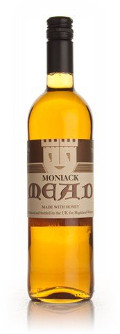
Moniack Mead is one of our favourite traditional-style meads. It is a dark, warming honey wine with prominent caramel and fermented-honey flavours, balanced by light floral notes and a drier edge than its colour might suggest.
Originally produced at Moniack Castle in the Scottish Highlands, it is now part of Lyme Bay Winery’s range. We continue to classify it as a Scottish mead because of its origin and identity, even though Lyme Bay Winery is based in Devon.
Our verdict: choose Moniack if you want a full-bodied, caramel-led mead rather than a light or delicately floral example. At 14.6% ABV, it is best treated like a dessert wine and served in a small glass. We have also enjoyed it gently warmed at Edinburgh’s Christmas market, which suits its rich flavour particularly well in winter.
Appearance
Moniack has a deep burnt-orange colour that hints at the caramel flavours to come. There are strong legs on the glass from its 14.6% ABV, but it remains pleasantly translucent when held to the light.
Nose
The aroma is lightly floral with a robust core of caramel and fermented honey. It has a more powerful nose than many lighter mead styles.
Taste
The palate is smooth and warming, with honey and caramel at the centre. It tastes sweet, but a slight dryness and gentle floral character keep it from becoming cloying. The finish is lingering and rich.
Food pairing
Serve Moniack with mature cheese, rich casseroles or a not-too-sweet dessert. Our favourite pairing is cranachan at the end of a Burns Supper.
Where to buy Moniack Mead
Availability checked: October 2026.
- Buy Moniack Mead direct from Lyme Bay Winery
- Buy Moniack Mead at Master of Malt (affiliate link)
- Check Moniack Mead availability on Amazon UK
Affiliate disclosure: The Master of Malt link is an affiliate link. If you make a purchase, Traditional Mead UK may receive a commission at no extra cost to you. Read the full Affiliate Disclosure.
Prices and stock can change, so compare the delivered price before ordering.